

📝 Medically reviewed by Dr. Trager Hintze
🔍 Last updated Apr 9, 2026
📚 10 citations
📖 8 minute read

Dr. Hintze completed his Doctor of Pharmacy degree at Idaho State University College of Pharmacy, followed by post-graduate residencies at the University of Oklahoma College of Pharmacy and University Hospital in San Antonio, Texas. Dr. Hintze is an Assistant Professor in the Department of Medical Education at the Alice L. Walton School of Medicine in Bentonville, Arkansas.
Article Summary
- Morning fatigue is most often caused by sleep inertia, poor sleep quality, and imbalaced cortisol on waking - and it affects up to 30% of adults even when they get enough hours of sleep.
- Sleep quality beats sleep quantity. Fragmented sleep can reduce deep (restorative) slow-wave sleep by up to 40%
- Your cortisol response matters. A healthy wake-up triggers a 50%-60% cortisol rise within 30-45 minutes. When this is blunted (common with chronic stress) wou wake up feeling flat and slow.
Jump to:
- What Is Morning Fatigue?
- What Causes Morning Fatigue?
- Why You Feel Better Later in the Day
- How to Support Your Morning Recovery
- Supplement Support
Waking up is supposed to feel like a reset. But for many people, morning feels more like starting the day already drained. Research suggests up to 30% of adults regularly experience morning fatigue, even after a full night's sleep.¹ If you have ever asked yourself "why do I feel worse after sleeping?" There's a real physiological reason behind it.
What Is Morning Fatigue?
Morning fatigue is more than normal grogginess. It can feel like waking up unrefreshed, experiencing brain fog, or needing hours before you feel functional. Scientifically, it overlaps with a cluster of issues: sleep inertia, non–restorative sleep, and circadian rhythm disruption that often occur together rather than in isolation.
What Causes Morning Fatigue?
1. Sleep Inertia (Your Brain Is Still Booting Up)
Immediately after waking, the brain doesn't instantly switch to full power. This state, called sleep inertia, temporarily impairs focus, memory, and reaction time. Studies show cognitive performance can drop by up to 34% in the first 30 minutes after waking, ² and brain imaging reveals reduced activity in the prefrontal cortex (responsible for decisions and reasoning) during this window. ³
2. Poor Sleep Quality (Not Quantity)
The typical seven or eight hours of sleep isn't always enough if that sleep is fragmented. Your body needs deep slow–wave sleep to repair tissue, regulate hormones, and support immune function. When sleep is interrupted, by stress, environment, or an underlying issue, deep sleep can fall by up to 40%, ⁴ leaving you physically undercovered physically underrecovered regardless of total time in bed.
3. A Blunted Cortisol Response
In a healthy wake–up cycle, cortisol rises 50–60% within the first 30–45 minutes after waking; this is what generates alertness and readiness to move. When that response is blunted, as often seen in people dealing with chronic stress or fatigue patterns, ⁵ energy feels low and getting out of bed feels disproportionately hard.
4. Your Internal Clock Is Misaligned
Your circadian rhythm controls when your body expects to be asleep or awake. If it's out of sync, due to irregular schedules, late light exposure, or travel, you may wake up while your body still thinks it's nighttime, with melatonin levels still elevated. Research links this mismatch to impaired energy, cognitive performance, and metabolic function. ⁶
Why You Feel Better Later in the Day
Many people notice they feel worse in the morning and gradually improve. This happens as sleep inertia fades, cortisol stabilizes, and blood flow to the brain increases, not because anything "fixes itself," but because the body catches up to where it should have started. If your mornings consistently improve by midday, that's a strong signal the issue is in your recovery systems, not a persistent health problem.
How to Support Your Body in the Morning
Small, consistent changes make a real difference over time.
1. Get Light Early
Even 30 minutes of light exposure in the morning helps suppress lingering melatonin and reset your internal clock. ⁹
"I consider viewing morning sunlight in the top five of all actions that support mental health, physical health and performance." Andrew Huberman.
Keep Reading: Using Light for Health
2. Hydrate First Thing
Rehydrating with water first thing supports circulation and cognitive function.
3. Give Yourself a Slow Start
A 30–60 minute transition window before jumping into work allows sleep inertia to fully clear.
3. Keep Your Schedule Consistent
Irregular sleep patterns are directly linked to lower energy and poorer sleep quality overall.¹⁰ Going to bed and waking at the same time is one of the highest–leverage changes you can make.
Supplement Support for Morning Fatigue
While lifestyle habits are foundational, some people explore nutritional support as part of their morning routine. Ingredients commonly studied in the context of energy, recovery, and immune balance include amino acids like L–Lysine, which appear in formulas designed to support the body's overnight resilience.
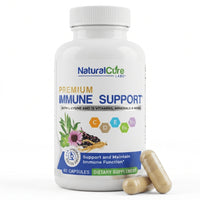
At NCL (Natural Cure Labs), our L–Lysine & Monolaurin combo is a popular choice for those looking to support immune function and overall recovery as part of their daily routine. ‡
Final Thoughts
Feeling worse after sleeping is frustrating, but it's rarely random. Most morning fatigue comes down to sleep quality, not just duration, combined with how well your cortisol, circadian rhythm, and immune recovery systems are functioning. Understanding that is the first step toward making targeted, sustainable improvements.
References
- Ohayon, M. M. (2011). Epidemiological overview of sleep disorders in the general population. Sleep Medicine Research, 10(1), 1–9. https://www.sleepmedres.org/upload/pdf/smr-2-1-1.pdf
- Tassi, P., & Muzet, A. (2000). Sleep inertia. Sleep Medicine Reviews, 4(4), 341–353. https://doi.org/10.1053/smrv.2000.0098
- Thomas, M., Sing, H., Belenky, G., et al. (2000). Neural basis of alertness and cognitive performance impairments during sleepiness. Journal of Sleep Research, 9(4), 335–352. https://doi.org/10.1046/j.1365-2869.2000.00225.x
- Bonnet, M. H., & Arand, D. L. (2003). Clinical effects of sleep fragmentation versus sleep deprivation. Sleep Medicine Reviews, 7(4), 297–310. https://doi.org/10.1053/smrv.2001.0245
- Clow, A., Hucklebridge, F., Stalder, T., Evans, P., & Thorn, L. (2010). The cortisol awakening response: More than a measure of HPA axis function. Neuroscience & Biobehavioral Reviews, 35(1), 97–103. https://doi.org/10.1016/j.neubiorev.2009.12.011
- Wright, K. P., Jr., Hull, J. T., & Czeisler, C. A. (2013). Relationship between alertness, performance, and body temperature in humans. American Journal of Physiology, 283(6), R1370–R1377. https://doi.org/10.1152/ajpregu.00205.2002
- Ganio, M. S., Armstrong, L. E., Casa, D. J., et al. (2011). Mild dehydration impairs cognitive performance and mood. Journal of Nutrition, 141(8), 1490–1495. https://doi.org/10.1017/s0007114511002005
- Newton, J. L., Okonkwo, O., Sutcliffe, K., Seth, A., Shin, J., & Jones, D. E. (2007). Symptoms of autonomic dysfunction in chronic fatigue syndrome. QJM: An International Journal of Medicine, 100(8), 519–526. https://doi.org/10.1093/qjmed/hcm057
- Khalsa, S. B. S., Jewett, M. E., Cajochen, C., & Czeisler, C. A. (2003). A phase response curve to single bright light pulses in human subjects. Journal of Physiology, 549(3), 945–952. https://doi.org/10.1113/jphysiol.2003.040477
- Phillips, A. J. K., Clerx, W. M., O'Brien, C. S., et al. (2017). Irregular sleep/wake patterns are associated with poorer academic performance. Scientific Reports, 7, 3216. https://doi.org/10.1038/s41598-017-03171-4
‡ These statements have not been evaluated by the Food and Drug Administration. This product is not intended to diagnose, treat, cure, or prevent any disease.
--
NCL (Natural Cure Labs) provides dietary supplements made from naturally derived ingredients. Our research-backed products contain premium botanicals and antioxidants that encourage healthy living and holistic wellness. Each high-quality product comes with a Clean Label that certifies our commitment to quality, transparency, and research