

📝 Medically reviewed by Dr. Patricia Shelton
🔍 Last updated July 15, 2024
📚 17 citations
📖 6 minute read


Dr. Patricia Shelton, MD, has been a medical communicator and educator since 2014. She holds a Doctor of Medicine degree and a Bachelor's degree in Neuroscience, both from the University of Washington in Seattle.
-
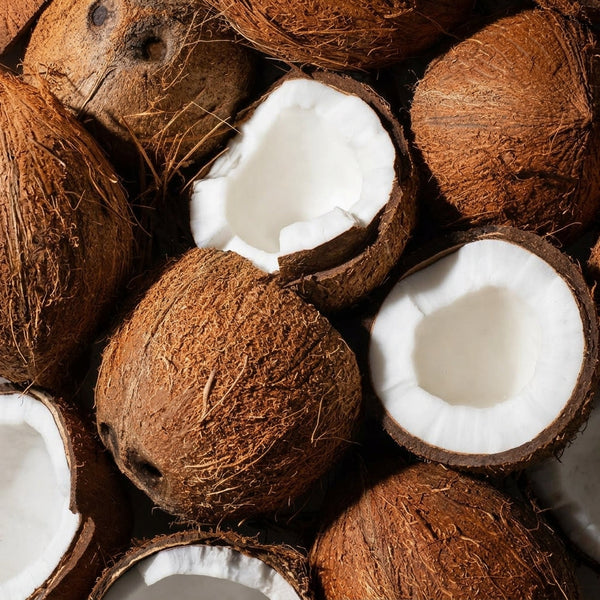
According to a 2018 study in the Journal of The European Academy of Dermatology & Venerology, 29.4% of adults have xerotic (dry) skin. ¹ Coconut oil, the highest natural source of lauric acid, has been shown to help moisturize and hydrate dry skin. ²
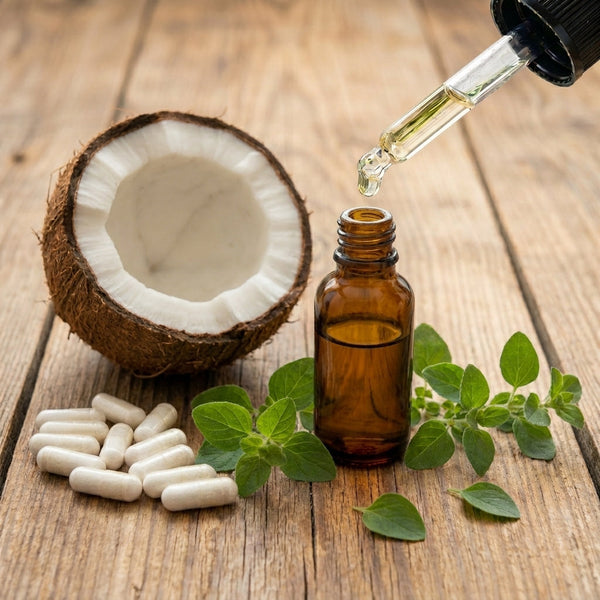
Monolaurin is a derivative of lauric acid with many medicinal, cosmetic, and skincare applications. This highly-researched natural ingredient may support skin, digestive, and immune health and is often used in dietary supplements for easy consumption. ‡
Jump To:
Keep reading to learn about how monolaurin can enhance your skin and hair health.
See Related: What Are Botanicals And How Can They Support Health?

What is Monolaurin?
Monolaurin is a chemical found in high concentrations in coconut oil as well as human breast milk. Around 50% of the fatty acid content of coconut oil is lauric acid, a chemical that is converted to monolaurin in the body. ³
Monolaurin also goes by the name of glycerol monolaurate or glyceryl laurate. This naturally occurring compound is a monoglyceride, meaning its chemical structure is that of a single molecule of glycerol attached to a fatty acid. ⁴ ⁵
Monolaurin is typically made via a process known as esterification that combines lauric acid with glycerol, resulting in a compound with promising applications for health and beyond. Glycerol, or glycerin, is a colorless and odorless compound found naturally in the body. It binds to fatty acids in order to store them or to convert them to other compounds and acts as a humectant, a substance that holds water in tissues to hydrate them. Lauric acid is a naturally occurring fatty acid found in sources like human breast milk and coconut oil. ⁶
Monolaurin has a variety of applications and uses, including:
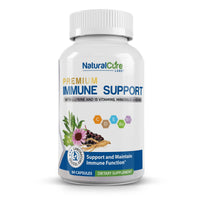
- Dietary supplement. Monolaurin is a key ingredient in immune-support dietary supplements, like the Premium Monolaurin 600mg capsules from Natural Cure Labs. ‡
- Food production. Monolaurin is used as a food additive, emulsifier, and preservative in some processed foods. ⁷ ⁸ ⁹ ¹⁰
- Manufacturing. Monolaurin is often used in manufactured goods, particularly skin care products like deodorants, detergents, and cosmetics. ⁷ ⁸ ⁹ ¹⁰

Bonus: How Does The Innate Immune System Work?
How Can Monolaurin Benefit Skin and Hair?
Monolaurin may support skin and hair health when applied topically or taken as a supplement. ‡
Virgin coconut oil is made by cold-pressing fresh coconut meat, which prevents the loss of vitamin E, vitamin A, polyphenols, and other nutrients. These micronutrients are necessary for the hair and skin health. ¹¹ ¹² By contrast, refined coconut oil generally loses many nutrients during the refining process, which may use heat, chemicals, or a combination of these.
Coconut oil, a rich source of monolaurin, has many dermatological applications and has been used topically on the skin and hair for centuries across a variety of cultures. It has been shown to have antioxidant and support for a healthy inflammatory response. ¹³
Monolaurin may also possess properties that can benefit skin and hair health. The natural immune-supporting properties of monolaurin can assist in overall well-being, which is critical to skin and hair health. Studies also show that monolaurin exhibits immune-regulating effects in lab settings, which can support skin health. ¹⁴ ¹⁵ ¹⁶ ¹⁷
Which Monolaurin Supplements Support Skin and Hair Health?
Since 2015, Natural Cure Labs has specialized in crafting high-quality supplements with premium botanicals. Our collection of award-winning monolaurin supplements is made with coconut-derived glycerol monolaurate and is non-GMO, gluten-free, and vegan.
Our monolaurin-based dietary supplements include the following products:
Our Clean Label monolaurin products are designed to support a healthy immune system and contain no synthetic colors, additives, or preservatives, only consisting of naturally derived ingredients that support overall wellness. ‡

Final Thoughts
Monolaurin has many applications in cosmetics and medicine and is often taken as a supplement to support overall wellness and immune system health. Research shows that this natural fat has the potential to support skin and hair health.
Keep Reading: How Can I Increase My White Blood Cell Count Naturally?
-
References
- Augustin, M., Körber, K. A., Wilsmann-Theis, D., Itschert, G., Staubach-Renz, P., Maul, T-J., & Zander, N. (2018). Prevalence, predictors and comorbidity of dry skin in the general population. Journal of The European Academy of Dermatology & Venerology, Volume 33, Issue 1, January 2019, Pages 147-150. https://doi.org/10.1111/jdv.15157
- Agero, A. L., & Verallo-Rowell, V. M. (2004). A randomized double-blind controlled trial comparing extra virgin coconut oil with mineral oil as a moisturizer for mild to moderate xerosis. Dermatitis : contact, atopic, occupational, drug, 15(3), 109–116. https://doi.org/10.2310/6620.2004.04006
- McCarty, M. F., & DiNicolantonio, J. J. (2016). Lauric acid-rich medium-chain triglycerides can substitute for other oils in cooking applications and may have limited pathogenicity. Open heart, 3(2), e000467. https://doi.org/10.1136/openhrt-2016-000467
- Tangwatcharin, P., & Khopaibool, P. (2012). Activity of virgin coconut oil, lauric acid or monolaurin in combination with lactic acid against Staphylococcus aureus. The Southeast Asian journal of tropical medicine and public health, 43(4), 969–985.
- Clarke, N. M., & May, J. T. (2000). Effect of antimicrobial factors in human milk on rhinoviruses and milk-borne cytomegalovirus in vitro. Journal of medical microbiology, 49(8), 719–723. https://doi.org/10.1099/0022-1317-49-8-719
- Miao, S., & Li, X. (2021). Enzymatic esterification of lauric acid to give monolaurin in a microreactor. Impact Factor: 1.0 / 5-Year Impact Factor: 1.1. https://doi.org/10.1177/1747519820977164
- Gil, D., Shuvaev, S., Frank-Kamenetskii, A., Reukov, V., Gross, C., & Vertegel, A. (2017). Novel Antibacterial Coating on Orthopedic Wires To Eliminate Pin Tract Infections. Antimicrobial agents and chemotherapy, 61(7), e00442-17. https://doi.org/10.1128/AAC.00442-17
- Zhang, H., Wei, H., Cui, Y., Zhao, G., & Feng, F. (2009). Antibacterial interactions of monolaurin with commonly used antimicrobials and food components. Journal of food science, 74(7), M418–M421. https://doi.org/10.1111/j.1750-3841.2009.01300.x
- Dufour, M., Manson, J. M., Bremer, P. J., Dufour, J. P., Cook, G. M., & Simmonds, R. S. (2007). Characterization of monolaurin resistance in Enterococcus faecalis. Applied and environmental microbiology, 73(17), 5507–5515. https://doi.org/10.1128/AEM.01013-07
- Thormar, H., Hilmarsson, H., & Bergsson, G. (2006). Stable concentrated emulsions of the 1-monoglyceride of capric acid (monocaprin) with microbicidal activities against the food-borne bacteria Campylobacter jejuni, Salmonella spp., and Escherichia coli. Applied and environmental microbiology, 72(1), 522–526. https://doi.org/10.1128/AEM.72.1.522-526.2006
- VanBuren, C. A., & Everts, H. B. (2022). Vitamin A in Skin and Hair: An Update. Nutrients, 14(14), 2952. https://doi.org/10.3390/nu14142952
- Pincemail, J., & Meziane, S. (2022). On the Potential Role of the Antioxidant Couple Vitamin E/Selenium Taken by the Oral Route in Skin and Hair Health. Antioxidants (Basel, Switzerland), 11(11), 2270. https://doi.org/10.3390/antiox11112270
- Parwe, S., & Kuchewar, V. (2022). A narrative review on use of virgin coconut oil in dermatology. Journal of Indian System of Medicine 10(2):86-89. DOI:10.4103/jism.jism_34_22
- Lin, T. K., Zhong, L., & Santiago, J. L. (2017). inflammation-supporting and Skin Barrier Repair Effects of Topical Application of Some Plant Oils. International journal of molecular sciences, 19(1), 70. https://doi.org/10.3390/ijms19010070
- Preuss, H. G., Echard, B., Enig, M., Brook, I., & Elliott, T. B. (2005). Minimum inhibitory concentrations of herbal essential oils and monolaurin for gram-positive and gram-negative bacteria. Molecular and cellular biochemistry, 272(1-2), 29–34. https://doi.org/10.1007/s11010-005-6604-1
- Esquenazi, D., Wigg, M. D., Miranda, M. M., Rodrigues, H. M., Tostes, J. B., Rozental, S., da Silva, A. J., & Alviano, C. S. (2002). Antimicrobial and antiviral activities of polyphenolics from Cocos nucifera Linn. (Palmae) husk fiber extract. Research in microbiology, 153(10), 647–652. https://doi.org/10.1016/s0923-2508(02)01377-3
- Carpo, B. G., Verallo-Rowell, V. M., & Kabara, J. (2007). Novel antibacterial activity of monolaurin compared with conventional antibiotics against organisms from skin infections: an in vitro study. Journal of drugs in dermatology : JDD, 6(10), 991–998.
‡ These statements have not been evaluated by the Food and Drug Administration. This product is not intended to diagnose, treat, cure, or prevent any disease.
--
Natural Cure Labs provides dietary supplements made from naturally derived ingredients. Our research-backed products contain premium botanicals and antioxidants that encourage healthy living and holistic wellness. Each high-quality product comes with a Clean Label that certifies our commitment to quality, transparency, and research. To stay connected and learn more, follow us on Facebook, Instagram, and TikTok.