

📝 Medically reviewed by Dr. Patricia Shelton
🔍 Last updated June 3, 2026
📚 18 citations
📖 7 minute read

Dr. Patricia Shelton, MD, has been a medical communicator and educator since 2014. She holds a Doctor of Medicine degree and a Bachelor's degree in Neuroscience, both from the University of Washington in Seattle.
Article Summary
- Mulberry leaf has been used in Traditional Chinese Medicine for over 5,000 years and contains polyphenol antioxidants, vitamin C, zinc, and potassium ³ ⁴ ⁵
- Research suggests mulberry leaf extract may help support healthy glucose levels already within a normal range, in part through its compound DNJ, an alpha-glucosidase inhibitor ‡
- The most common and practical way to consume mulberry leaf is through standardized dietary supplement extracts, including Level Off, which combines mulberry leaf with cinnamon and citrus extracts to support healthy glucose levels in healthy individuals ‡
- Other studied benefits include potential support for heart health, skin tone, and weight management, though many findings come from early-stage or animal research
92% of the United States population is deficient in at least one vitamin or mineral. ¹ A nutritional deficiency can affect your body's ability to carry out necessary functions, which can be detrimental to your overall well-being if ignored. ²
Mulberry leaves are known to contain a variety of polyphenol antioxidants, as well as nutrients such as vitamin C, zinc, and potassium. ³ ⁴ ⁵ This herbal remedy has been used extensively in both traditional medicine and wellness supplements for many years.
Jump To:
- What Is the History of Mulberry Leaf in Traditional Medicine?
- How Are Mulberry Leaves Used?
- What Does Research Say About Mulberry Leaf?
See Related: The Positive Effects Of Monolaurin On Your Health
What Is the History of Mulberry Leaf in Traditional Medicine?
The mulberry tree, scientifically known as Morus, is a plant that is native to China. There are a few different varieties of mulberry, which are all similar to each other. For more than 5,000 years, the leaf of the mulberry tree has been a valuable resource in Traditional Chinese Medicine.
The fruit of the mulberry plant can be found in several different colors and can be eaten raw, dried, or made into wine or jam. The leaves are also regularly used to brew herbal teas and tonics. ⁶ ⁷
In the 19th century, the mulberry plant was brought to the United States to be used as a host plant for silkworm farming. Now, the white mulberry plant is considered an invasive species in the U.S.
The mulberry tree is grown around the world in many different countries, including Canada, Türkiye, and Kyrgyzstan. This nutritious botanical grows best in warm climates and dry soils. ⁸
How Are Mulberry Leaves Used?
There are several species of mulberry (Morus):
- Black mulberry (Morus nigra)
- Red mulberry (Morus ruba)
- White mulberry (Morus alba) ⁹
Mulberry leaves have various medicinal, culinary, and industrial applications.
Some people consume mulberry leaves raw. However, this is generally not recommended as the leaves and other parts of the plant contain latex, a milky white sap. When ingested or touched, this sap can be mildly toxic and cause irritation of the digestive tract or skin. Some young leaves can be eaten after they're thoroughly cooked to remove the toxic substance. ¹⁰
Mulberry leaf tea is a popular beverage in many Asian countries. Its extract can also be used to make tinctures and herbal tonics.
Mulberry Leaf Extract Supplements
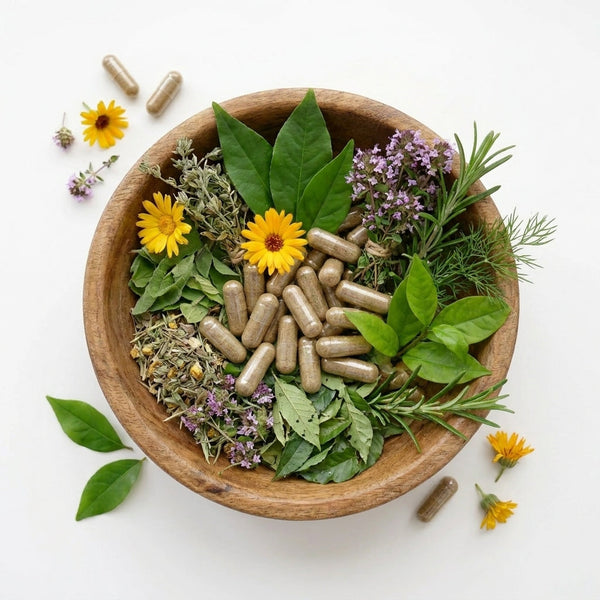
A popular way to consume mulberry leaf is through standardized extracts offered in dietary supplements. The leaves of the Morus plant offer a range of impressive potential health benefits, as they are rich in antioxidants and nutrients. Mulberry leaf supplements offer an easy way to get access to the benefits of mulberry leaf without some of the associated risks or costs of dealing with the raw leaf. ‡
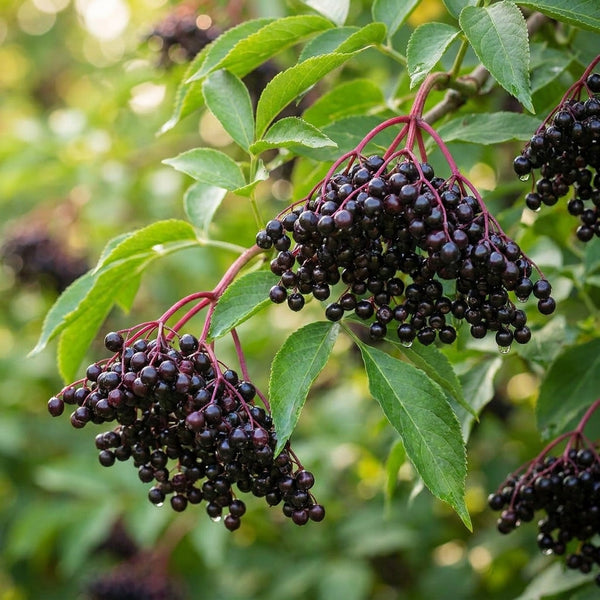
Mulberry isn't the only natural botanical that is known to support overall health. Other ingredients like L-lysine, ginseng, elderberry, or astragalus are also often used to make supplements that support immune health and digestive function. ‡
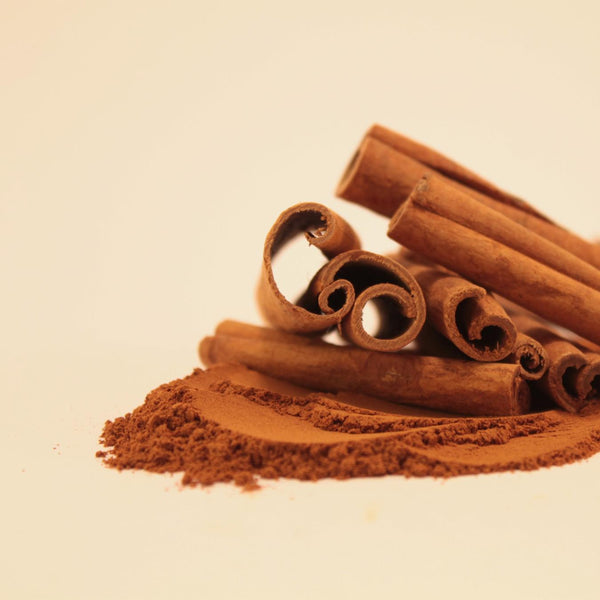
Natural Cure Labs' Level Off is formulated with various plant extracts backed by scientific research that can help support healthy glucose levels in healthy individuals associated with consuming carbs and sugar. With white mulberry leaf extract (containing standardized 1-Deoxynojirimycin [DNJ]), along with citrus bioflavonoids and cinnamon extract, Level Off offers a clean label way to access these intriguing ingredients. ‡
Bonus: What Does It Mean To Have A 'Clean Label'?
What Does Research Say About Mulberry Leaf?
Research suggests that mulberry leaves may have certain benefits.
Can Mulberry Leaf Extract Support Healthy Glucose Levels?
Studies show that mulberry leaf extract may be able to support healthy glucose levels and cholesterol levels in healthy individuals. ¹¹
Mulberry leaf extract also contains compounds like 1-deoxynojirimycin (DNJ) that may help support healthy glucose levels already within a normal range. ‡ DNJ seems to prevent the absorption of carbohydrates in your gut and can help manage insulin levels that are already in a healthy range. Insulin is a hormone that plays a key role in glucose metabolism, and the levels of insulin or its actions are altered in some people. ³ ¹² ¹³

Other Potential Benefits
Some studies suggest that mulberry leaves have other potential benefits.
- May support cardiovascular wellness. Mulberry leaves may be able to support healthy blood pressure levels and a healthy inflammatory response. ¹¹ ¹⁴ ¹⁵
- Can affect skin tone. Some in-vitro (test-tube) research shows that mulberry leaves can help even skin tone. ¹⁶
- Can support weight management. Rodent studies note that mulberry leaf extract can help support weight management via fat burning. ¹⁷
If you are considering taking mulberry extract, consult your healthcare provider, especially if you are taking any medications or have a health condition. Though mulberry leaf is considered safe, children and pregnant or breastfeeding women should avoid taking mulberry leaf due to insufficient safety research. ¹⁸
Keep Reading: Lauric Acid: Potential Health Benefits, Sources, Uses, And More
References
- the biostation. 92% of the U.S. Population has Vitamin Deficiency. Are You One of Them? Retrieved from https://thebiostation.com/bioblog/do-you-have-vitamin-deficiency on May 23, 2024.
- Kiani, A. K., Dhuli, K., Donato, K., Aquilanti, B., Velluti, V., Matera, G., Iaconelli, A., Connelly, S. T., Bellinato, F., Gisondi, P., & Bertelli, M. (2022). Main nutritional deficiencies. Journal of preventive medicine and hygiene, 63(2 Suppl 3), E93–E101. https://doi.org/10.15167/2421-4248/jpmh2022.63.2S3.2752
- Lown, M., Fuller, R., Lightowler, H., Fraser, A., Gallagher, A., Stuart, B., Byrne, C., & Lewith, G. (2017). Mulberry-extract improves glucose tolerance and decreases insulin concentrations in normoglycaemic adults: Results of a randomised double-blind placebo-controlled study. PloS one, 12(2), e0172239. https://doi.org/10.1371/journal.pone.0172239
- Chan, E. W., Lye, P. Y., & Wong, S. K. (2016). Phytochemistry, pharmacology, and clinical trials of Morus alba. Chinese journal of natural medicines, 14(1), 17–30. https://doi.org/10.3724/SP.J.1009.2016.00017
- Srivastava, S., Kapoor, R., Thathola, A., & Srivastava, R. P. (2006). Nutritional quality of leaves of some genotypes of mulberry (Morus alba). International journal of food sciences and nutrition, 57(5-6), 305–313. https://doi.org/10.1080/09637480600801837
- Huang, H. P., Ou, T. T., & Wang, C. J. (2013). Mulberry (桑葚子 sang shèn zǐ) and its bioactive compounds, the chemoprevention effects and molecular mechanisms in vitro and in vivo. Journal of traditional and complementary medicine, 3(1), 7–15. https://doi.org/10.4103/2225-4110.106535
- Liu, C. H., Liu, F., & Xiong, L. (2023). Medicinal parts of mulberry (leaf, twig, root bark, and fruit) and compounds thereof are excellent traditional Chinese medicines and foods for diabetes mellitus. Journal of Functional Foods, Vol. 106, July 2023, 105619. https://doi.org/10.1016/j.jff.2023.105619
- University of Redlands. White Mulberry. Retrieved from https://sites.redlands.edu/trees/species-accounts/whitemulberry/ on May 23, 2024.
- Thaipitakwong, T., Numhom, S., & Aramwit, P. (2018). Mulberry leaves and their potential effects against cardiometabolic risks: a review of chemical compositions, biological properties and clinical efficacy. Pharmaceutical biology, 56(1), 109–118. https://doi.org/10.1080/13880209.2018.1424210
- Gai, Y. P., Zhao, Y. N., Zhao, H. N., Yuan, C. Z., Yuan, S. S., Li, S., Zhu, B. S., & Ji, X. L. (2017). The Latex Protein MLX56 from Mulberry (Morus multicaulis) Protects Plants against Insect Pests and Pathogens. Frontiers in plant science, 8, 1475. https://doi.org/10.3389/fpls.2017.01475
- Chan, E. W., Lye, P. Y., & Wong, S. K. (2016). Phytochemistry, pharmacology, and clinical trials of Morus alba. Chinese journal of natural medicines, 14(1), 17–30. https://doi.org/10.3724/SP.J.1009.2016.00017
- Jiang, Y. G., Wang, C. Y., Jin, C., Jia, J. Q., Guo, X., Zhang, G. Z., & Gui, Z. Z. (2014). Improved 1-Deoxynojirimycin (DNJ) production in mulberry leaves fermented by microorganism. Brazilian journal of microbiology : [publication of the Brazilian Society for Microbiology], 45(2), 721–729. https://doi.org/10.1590/s1517-83822014000200048
- Riche, D. M., Riche, K. D., East, H. E., Barrett, E. K., & May, W. L. (2017). Impact of mulberry leaf extract on type 2 diabetes (Mul-DM): A randomized, placebo-controlled pilot study. Complementary therapies in medicine, 32, 105–108. https://doi.org/10.1016/j.ctim.2017.04.006
- Aramwit, P., Petcharat, K., & Supasyndh, O. (2011). Efficacy of mulberry leaf tablets in patients with mild dyslipidemia. Phytotherapy research : PTR, 25(3), 365–369. https://doi.org/10.1002/ptr.3270
- Kojima, Y., Kimura, T., Nakagawa, K., Asai, A., Hasumi, K., Oikawa, S., & Miyazawa, T. (2010). Effects of mulberry leaf extract rich in 1-deoxynojirimycin on blood lipid profiles in humans. Journal of clinical biochemistry and nutrition, 47(2), 155–161. https://doi.org/10.3164/jcbn.10-53
- de Freitas, M. M., Fontes, P. R., Souza, P. M., William Fagg, C., Neves Silva Guerra, E., de Medeiros Nóbrega, Y. K., Silveira, D., Fonseca-Bazzo, Y., Simeoni, L. A., Homem-de-Mello, M., & Oliveira Magalhães, P. (2016). Extracts of Morus nigra L. Leaves Standardized in Chlorogenic Acid, Rutin and Isoquercitrin: Tyrosinase Inhibition and Cytotoxicity. PloS one, 11(9), e0163130. https://doi.org/10.1371/journal.pone.0163130
- Sheng, Y., , Liu, J., , Zheng, S., , Liang, F., , Luo, Y., , Huang, K., , Xu, W., , & He, X., (2019). Mulberry leaves ameliorate obesity through enhancing brown adipose tissue activity and modulating gut microbiota. Food & function, 10(8), 4771–4781. https://doi.org/10.1039/c9fo00883g
- Li, Y., Zhang, X., Liang, C., Hu, J., & Yu, Z. (2018). Safety evaluation of mulberry leaf extract: Acute, subacute toxicity and genotoxicity studies. Regulatory toxicology and pharmacology : RTP, 95, 220–226. https://doi.org/10.1016/j.yrtph.2018.03.007
‡ These statements have not been evaluated by the Food and Drug Administration. This product is not intended to diagnose, treat, cure, or prevent any disease.
--
Natural Cure Labs provides dietary supplements made from naturally derived ingredients. Our research-backed products contain premium botanicals and antioxidants that encourage healthy living and holistic wellness. Each high-quality product comes with a Clean Label that certifies our commitment to quality, transparency, and research. To stay connected and learn more, follow us on Facebook, Instagram, and TikTok.