

📝 Medically reviewed by Dr. Evan Leonard
🔍 Last updated June 22, 2026
📚 10 citations
📖 8 minute read

Dr. Evan Leonard is a board-certified physician associate and medical scientist with experience in internal, emergency, and critical care medicine at University of Florida Health. He serves as an assistant professor of anatomy at Barry University and a visiting professor at Chamberlain University, has authored peer-reviewed research, and has been recognized with honors including Best PA in Medicine and America's Best in Medicine for his contributions to healthcare and medical education.
Article Summary
- L-Lysine is an essential amino acid that plays a direct role in collagen synthesis - the body cannot produce it on its own, so it must come from diet or supplementation
- Lysine residues undergo hydroxylation during collagen formation, creating the cross-links that give collagen its structural stability and strength
- Adequate lysine intake, alongside vitamin C and other cofactors, may help support the body’s natural collagen production for skin, joint, and connective tissue health
- While collagen supplements have shown promise for skin health in clinical trials, ensuring sufficient lysine as a building block may offer complementary support
Jump to:
- What Is Collagen and Why Does It Matter?
- What Role Does L-Lysine Play in Collagen Production?
- Why Is Hydroxylysine Important for Collagen Stability?
- How Does Vitamin C Work With L-Lysine in Collagen Synthesis?
- Can L-Lysine Support Skin Health and Elasticity?
- What Are the Best Dietary Sources of L-Lysine?
- Where Does L-Lysine Supplementation Fit in a Wellness Routine?
- Final Thoughts
- References
Collagen is the most abundant protein in the human body, providing structural support to skin, bones, tendons, and connective tissues. As the body ages, natural collagen production gradually declines, which is one reason why skin elasticity and firmness tend to change over time.
While collagen supplements have gained significant attention in recent years, less is discussed about the building blocks the body needs to produce collagen on its own. L-Lysine - an essential amino acid that must be obtained through diet or supplementation - plays a critical role in this process.
Keep reading to learn how L-Lysine contributes to collagen synthesis, why it matters for skin and connective tissue health, and how to ensure adequate intake through diet and supplementation.
See Related: What Can L-Lysine Do For Your Skin?
What Is Collagen and Why Does It Matter?
Collagen is a family of structural proteins that account for approximately 30% of the total protein in the human body. It forms the primary framework of skin, bones, cartilage, tendons, ligaments, and blood vessels.3
The collagen molecule has a distinctive triple-helix structure, formed by three polypeptide chains wound tightly around each other. This structure gives collagen its remarkable tensile strength - the ability to resist stretching and tearing.3
There are at least 28 known types of collagen, but types I, II, and III are the most abundant. Type I collagen alone makes up about 90% of the body's total collagen and is the predominant form in skin, bones, and tendons. The body’s ability to produce collagen depends on the availability of specific amino acids - particularly glycine, proline, and lysine - along with essential cofactors like vitamin C.3 4
What Role Does L-Lysine Play in Collagen Production?
L-Lysine is one of the nine essential amino acids, meaning the body cannot synthesize it and must obtain it from external sources. In the context of collagen production, lysine serves as both a structural building block and a functional participant in the cross-linking process that gives collagen its strength.1
During collagen biosynthesis, lysine residues within the collagen molecule undergo a series of post-translational modifications. These modifications - including hydroxylation, glycosylation, and oxidative deamination - are essential for the proper assembly of collagen fibrils and their mechanical stability.1
Research using metabolic control analysis has shown that while glycine availability is often the primary limiting factor in collagen synthesis, lysine and proline also play significant roles. When any of these amino acids are insufficient, the rate of collagen production may be reduced.4
Why Is Hydroxylysine Important for Collagen Stability?
One of the most important post-translational modifications in collagen synthesis is the hydroxylation of lysine residues to form hydroxylysine. This reaction is catalyzed by the enzyme lysyl hydroxylase and requires vitamin C as an essential cofactor.1 2
Hydroxylysine serves two critical functions in collagen. First, it provides sites for the attachment of carbohydrate units (glycosylation), which influence how collagen fibrils pack together. Second, and perhaps more importantly, hydroxylysine residues participate in the formation of covalent cross-links between and within collagen molecules.2
These cross-links are what give collagen its tensile strength and structural integrity. Without adequate hydroxylysine - and by extension, without adequate lysine and vitamin C - the cross-linking process may be compromised, potentially affecting the mechanical properties of connective tissues.1 2
Bonus: What Is L-Lysine Good For? Uses, Benefits, And More
How Does Vitamin C Work With L-Lysine in Collagen Synthesis?
Vitamin C (ascorbic acid) is an essential cofactor for both prolyl hydroxylase and lysyl hydroxylase - the two enzymes responsible for hydroxylating proline and lysine residues in collagen. Without adequate vitamin C, these hydroxylation reactions cannot proceed normally.5
Research has shown that ascorbic acid also appears to stimulate collagen gene expression independently of its role in hydroxylation, potentially increasing the overall rate of collagen production at the cellular level.5
This relationship between vitamin C and lysine highlights why a comprehensive approach to supporting collagen production is important. Having adequate lysine available as a building block is only part of the equation - the body also needs sufficient vitamin C to properly modify those lysine residues during collagen assembly.
Can L-Lysine Support Skin Health and Elasticity?
Amino acids play a multifaceted role in skin health beyond their function as protein building blocks. They contribute to the skin’s natural moisturizing factors, participate in tissue repair processes, and help maintain the structural proteins - including collagen and elastin - that give skin its firmness and elasticity.6
Research has explored how amino acid composition may influence collagen synthesis rates in skin. One study found that specific amino acid combinations were associated with improved collagen synthesis in UV-exposed skin models, suggesting that the availability of the right amino acids may help support the skin’s natural repair and renewal processes.7
Meanwhile, meta-analyses of collagen supplementation studies have found that hydrolyzed collagen may help support skin hydration, elasticity, and overall appearance when taken consistently over time.9 10 These findings suggest that supporting the body’s collagen-related processes - whether through direct collagen supplementation, adequate amino acid intake, or both - may contribute to maintaining healthy-looking skin.
What Are the Best Dietary Sources of L-Lysine?
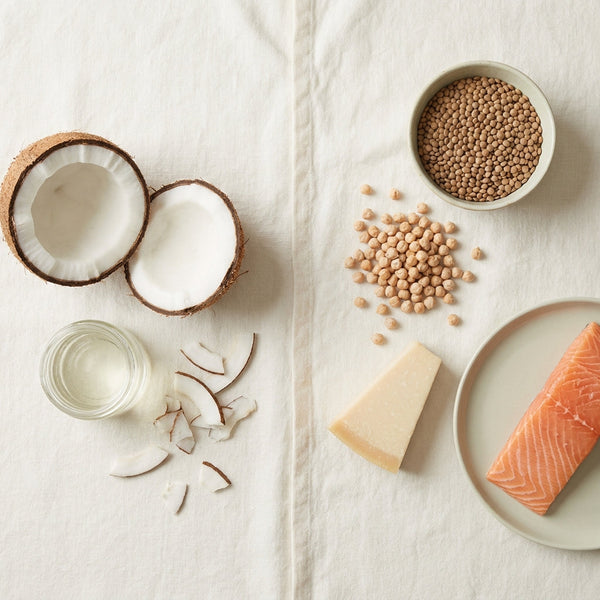
L-Lysine is found in a variety of protein-rich foods. Animal sources tend to provide the highest concentrations, but plant-based options are also available for those following vegetarian or vegan diets.
High-lysine foods include:
- Poultry (chicken, turkey)
- Fish (salmon, sardines, cod)
- Red meat (beef, lamb)
- Eggs and dairy products
- Legumes (lentils, chickpeas, black beans)
- Soy products (tofu, tempeh, edamame)
- Quinoa and pumpkin seeds
L-Lysine is considered an essential amino acid because the body cannot produce it on its own. For individuals whose diets may not consistently provide adequate lysine - particularly those on restricted or plant-heavy diets - supplementation may help ensure sufficient intake.8
Where Does L-Lysine Supplementation Fit in a Wellness Routine?
L-Lysine supplementation may be worth considering for individuals looking to support their overall amino acid intake, particularly those interested in maintaining healthy skin, hair, and connective tissues. Because lysine is essential and must come from external sources, ensuring adequate intake is an important aspect of nutritional wellness.8
For those interested in a standalone lysine supplement, the Clean L-Lysine 600mg from NCL (Natural Cure Labs) provides a straightforward, high-quality option with a clean label formulation - vegan, non-GMO, and free from unnecessary fillers.
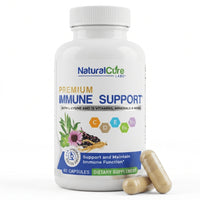
For individuals who also want to support their immune health alongside collagen-related benefits, the L-Lysine with Monolaurin formula combines L-Lysine with monolaurin in a single convenient capsule, offering dual support for both structural and immune wellness.
As with any supplement, quality matters. Look for products manufactured in GMP-certified facilities with third-party testing for purity and potency.
Final Thoughts
The connection between L-Lysine and collagen production is well-established in biochemistry. As an essential amino acid, lysine serves as both a structural component of collagen and a participant in the cross-linking reactions that give collagen its strength and stability.
Supporting the body’s natural collagen production involves more than any single nutrient. A balanced diet rich in lysine, proline, glycine, and vitamin C - combined with consistent wellness habits - provides the foundation for healthy collagen synthesis throughout life.
For individuals whose dietary intake may fall short, L-Lysine supplementation offers a practical way to help ensure the body has the building blocks it needs to support skin, connective tissue, and overall structural health.
Keep Reading: How Can Monolaurin Support Skin And Hair Health?
References:
- Yamauchi, M., & Sricholpech, M. (2012). Lysine post-translational modifications of collagen. Essays in Biochemistry, 52, 113-133. https://doi.org/10.1042/bse0520113
- Yamauchi, M., & Shiiba, M. (2008). Lysine hydroxylation and cross-linking of collagen. Methods in Molecular Biology, 446, 95-108. https://doi.org/10.1007/978-1-60327-084-7_7
- Shoulders, M. D., & Raines, R. T. (2009). Collagen structure and stability. Annual Review of Biochemistry, 78, 929-958. https://doi.org/10.1146/annurev.biochem.77.032207.120833
- de Paz-Lugo, P., Lupianez, J. A., Sicilia, J., & Melendez-Hevia, E. (2023). Control analysis of collagen synthesis by glycine, proline and lysine in bovine chondrocytes in vitro. Biosystems, 232, 105004. https://doi.org/10.1016/j.biosystems.2023.105004
- Pinnell, S. R. (1985). Regulation of collagen biosynthesis by ascorbic acid: A review. Yale Journal of Biology and Medicine, 58(6), 553-559. https://pubmed.ncbi.nlm.nih.gov/3008449/
- Solano, F. (2020). Metabolism and functions of amino acids in the skin. Advances in Experimental Medicine and Biology, 1265, 187-199. https://doi.org/10.1007/978-3-030-45328-2_11
- Murakami, H., Shimbo, K., Inoue, Y., Takino, Y., & Kobayashi, H. (2012). Importance of amino acid composition to improve skin collagen protein synthesis rates in UV-irradiated mice. Amino Acids, 42(6), 2481-2489. https://doi.org/10.1007/s00726-011-1059-z
- Datta, D., Bhinge, A., & Chandran, V. (2001). Lysine: Is it worth more? Cytotechnology, 36(1-3), 3-32. https://doi.org/10.1023/A:1014097121364
- de Miranda, R. B., Weimer, P., & Rossi, R. C. (2021). Effects of hydrolyzed collagen supplementation on skin aging: A systematic review and meta-analysis. International Journal of Dermatology, 60(12), 1449-1461. https://doi.org/10.1111/ijd.15518
- Pu, S. Y., Huang, Y. L., Pu, C. M., Kang, Y. N., Hoang, K. D., Chen, K. H., & Chen, C. (2023). Effects of oral collagen for skin anti-aging: A systematic review and meta-analysis. Nutrients, 15(9), 2080. https://doi.org/10.3390/nu15092080
‡ These statements have not been evaluated by the Food and Drug Administration. This product is not intended to diagnose, treat, cure, or prevent any disease.
-
NCL (Natural Cure Labs) provides dietary supplements made from naturally derived ingredients. Our research-backed products contain premium botanicals and antioxidants that encourage healthy living and holistic wellness. Each high-quality product comes with a Clean Label that certifies our commitment to quality, transparency, and research. To stay connected and learn more, follow us on Facebook, Instagram, and TikTok.