

📝 Medically reviewed by Dr. Trager Hintze
🔍 Last updated Apr 24, 2026
📚 12 citations
📖 8 minute read

Dr. Hintze completed his Doctor of Pharmacy degree at Idaho State University College of Pharmacy, followed by post-graduate residencies at the University of Oklahoma College of Pharmacy and University Hospital in San Antonio, Texas. Dr. Hintze is an Assistant Professor in the Department of Medical Education at the Alice L. Walton School of Medicine in Bentonville, Arkansas.
Article Summary
- More than a respiratory herb: Andrographis paniculata is one of the most studied botanicals for immune support, with over 30 randomized controlled trials published - but its benefits may extend well beyond seasonal respiratory comfort.
- Multi-pathway activity: The primary active compound, andrographolide, works through several biological pathways simultaneously, including inflammation modulation, antioxidant defense activation, and immune cell regulation.
- Emerging research areas: Studies have explored andrographis for digestive health support, internal antioxidant enzyme activation, and immune balance - benefits most consumers are not aware of.
- Quality and dosing matter: Not all andrographis supplements deliver the same amount of andrographolide. Standardized extracts and third-party testing are critical factors in supplement quality.
Jump to:
- What Is Andrographis and Why Is It Called the 'King of Bitters'?
- Can Andrographis Help Activate the Body's Own Antioxidant Defenses?
- What Does Emerging Research Suggest About Andrographis and Digestive Health?
- How Does Andrographis Interact With the Body's Inflammatory Pathways?
- What Do Laboratory Studies Reveal About Andrographis and Microorganisms?
- Why May Andrographis Support Immune Balance Rather Than Just Immune Boosting?
- How Much Andrographolide Should a Quality Supplement Contain?
Andrographis paniculata has been used in Ayurvedic and traditional Chinese medicine for centuries, primarily for respiratory wellness and general immune support. In recent decades, modern clinical research has begun to validate many of these traditional uses, with over 30 randomized controlled trials now published on this botanical. 1
However, much of the conversation around andrographis focuses on a single application: seasonal respiratory comfort. While this remains its most well-studied benefit, it is far from the only area where researchers have found promising results.
Keep reading to learn about five research-backed benefits of andrographis that most people - even regular supplement users - may not know about.
What Is Andrographis and Why Is It Called the 'King of Bitters'?
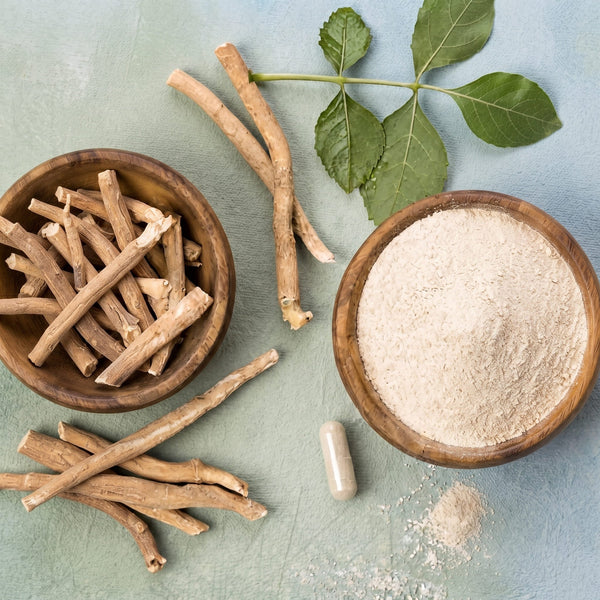
Andrographis paniculata, commonly known as the "King of Bitters," is an herbaceous plant native to South and Southeast Asia. It belongs to the Acanthaceae family and has been a staple of Ayurvedic medicine (where it is known as Kalmegh) and Traditional Chinese Medicine for centuries. 2
The plant's primary active compound is andrographolide, a diterpene lactone that accounts for most of its studied biological activity. Raw andrographis herb powder typically contains only 0.5 to 6 percent andrographolide by weight, which is why modern supplements use standardized extracts that concentrate this compound to 10 to 30 percent or higher. 2
What makes andrographis particularly interesting to researchers is that andrographolide appears to work through multiple biological pathways simultaneously - including inflammation, immune function, oxidative stress, and cellular defense. This multi-pathway activity is relatively uncommon for a single botanical compound and may help explain the breadth of research interest in this plant.
See Related: Andrographis Supplements: Benefits, Uses, History, And More
Can Andrographis Help Activate the Body's Own Antioxidant Defenses?
Most people associate antioxidant support with vitamins like C and E - nutrients that directly neutralize free radicals in the body. Andrographolide appears to work differently. Rather than acting as an external antioxidant, research suggests it may help activate the body's own internal antioxidant defense system. 3
This process centers on a transcription factor called Nrf2. When Nrf2 is activated, it moves into the cell nucleus and triggers production of the body's own protective enzymes, including superoxide dismutase (SOD1), catalase, and heme oxygenase-1 (HO-1). 3
Laboratory studies suggest that this type of internal antioxidant activation may be more biologically meaningful than simply consuming external antioxidants. External antioxidants provide a one-time neutralization effect, while Nrf2 activation may help upregulate the body's own ongoing defense mechanisms. 3
This is a benefit that rarely appears in mainstream conversations about andrographis, yet the laboratory research supporting it has been consistent across multiple studies.
What Does Emerging Research Suggest About Andrographis and Digestive Health?
While andrographis is primarily known for respiratory and immune applications, emerging research suggests it may also play a role in supporting digestive health - an area most consumers would not associate with this botanical.
One notable randomized, double-blind, placebo-controlled trial enrolled 224 adults and studied an andrographis extract (HMPL-004) at two different dosages over eight weeks. At the higher dose (1,800 mg per day), 60 percent of participants achieved a positive clinical response, compared to 40 percent in the placebo group - a statistically significant difference. 4
Researchers believe these digestive health benefits may be related to the same biological pathways that support immune function - specifically the NF-kB and Nrf2 pathways, which can help maintain healthy mucosal tissue in the gut. 5
While more research is needed, this trial represents one of the larger clinical studies conducted on andrographis outside of respiratory health and suggests the botanical's benefits may extend further than many consumers realize.
Bonus: The Role of Antioxidants in Immune and Metabolic Health
How Does Andrographis Interact With the Body's Inflammatory Pathways?
Many botanicals are described as supporting a healthy inflammatory response, but andrographolide's mechanism is unusually specific and well-characterized. It targets NF-kB, a protein complex often called the "master switch" of the body's inflammatory response. 6
When NF-kB is activated, it enters the cell nucleus and triggers production of pro-inflammatory signaling molecules, including TNF-alpha, IL-6, and IL-1beta. These molecules drive many of the responses the body produces during immune activation, such as swelling, redness, and discomfort. 6
Andrographolide appears to interfere with this process at a molecular level. Laboratory studies have shown that its alpha-methylene lactone ring can bind directly to the p50 subunit of NF-kB, physically blocking it from entering the nucleus and activating inflammatory gene expression. 6
This level of mechanistic detail is unusual for a botanical compound. While many herbal ingredients are described as having general supportive properties, andrographolide's mechanism has been mapped at the molecular level across multiple independent research groups, making it one of the better-understood botanicals in this category. 7
What Do Laboratory Studies Reveal About Andrographis and Microorganisms?
One of the more surprising findings in andrographis research is the breadth of its interactions with microorganisms in laboratory settings. Unlike many compounds that target a single pathway, andrographolide has been shown to interact with microorganisms at multiple stages. 8
Laboratory studies have documented three primary mechanisms. First, andrographolide appears to bind to surface proteins on certain microorganisms, which may help block them from attaching to host cells. Second, it has been shown to interfere with replication processes inside cells, potentially reducing the ability of microorganisms to multiply. Third, it may suppress envelope glycoprotein expression, which could reduce the spread of microorganisms to adjacent cells. 8
It is important to note that these findings come from laboratory and animal studies, not human clinical trials. The concentrations used in laboratory settings may not be achievable through oral supplementation. However, the breadth of these interactions may help explain why andrographis has shown such consistent results in human respiratory wellness studies, where the underlying mechanisms likely involve a combination of immune modulation and inflammatory pathway regulation. 1
Keep Reading: Andrographis vs. Echinacea: Which One is Better?
Why May Andrographis Support Immune Balance Rather Than Just Immune Boosting?
The phrase "immune boosting" is common in supplement marketing, but the reality of how the immune system works is more nuanced. An overactive immune response can be just as problematic as an underactive one. What the body needs is balance - and this is where andrographis research becomes particularly interesting.
Studies suggest that andrographolide may modulate the immune system in a context-dependent way, rather than simply amplifying activity across the board. 9
Research has documented several specific mechanisms. Andrographolide appears to regulate T-cell proliferation and cytokine release, helping calibrate the adaptive immune response. It may enhance natural killer (NK) cell activity, which is important for the body's early surveillance against abnormal cells. It has also been shown to modulate macrophage polarization - adjusting the balance between pro-inflammatory and inflammation-supporting macrophage states. 9
Perhaps most notably, research suggests andrographolide may help maintain a healthy balance between Th1 (cell-mediated) and Th2 (antibody-mediated) immune responses. This balance is relevant because an excessive shift in either direction can contribute to immune dysregulation. 9
For consumers who are cautious about "immune boosting" - particularly those concerned about immune overactivity - this modulating activity may be a meaningful distinction worth discussing with a healthcare provider.
How Much Andrographolide Should a Quality Supplement Contain?
Understanding these benefits is valuable, but they are only meaningful if the supplement you take delivers enough andrographolide to be relevant. This is where product quality becomes a critical factor.
Raw andrographis herb powder contains approximately 0.5 to 6 percent andrographolide by weight. At this concentration, a consumer would need to take 5,000 to 6,000 mg of raw powder daily just to reach the lower end of the dosing range used in clinical research. 2 Standardized extracts solve this problem by concentrating the active compound to practical levels.
Clinical trials on respiratory wellness have typically used doses of 48 to 60 mg of andrographolide per day, divided across multiple servings. Some studies have used doses up to 180 mg per day for other applications. 1
However, a 2024 quality assessment of commercially available andrographis supplements found widespread mislabeling and underdosing, with many products delivering significantly less andrographolide than stated on the label. 10
NCL (Natural Cure Labs) Premium Andrographis Extract delivers 1,200 mg of standardized extract with 100 mg of andrographolides per serving, placing it well within the dosing range used in clinical research. Each batch is verified through a Triple Testing Methodology at an ISO 17025 accredited laboratory, which includes microbial safety testing, ingredient identity verification, and label accuracy confirmation. The capsules are vegan, non-GMO, and free from common allergens.
Final Thoughts
Andrographis paniculata is best known for its role in respiratory wellness, but the research tells a broader story. From activating the body's internal antioxidant defenses to supporting digestive health, modulating specific inflammatory pathways, interacting with microorganisms at multiple levels, and helping maintain immune balance rather than simply amplifying immune activity - this botanical has earned its place as one of the more versatile ingredients in the supplement category.
What makes andrographis particularly noteworthy is the specificity of its research. Rather than vague claims about general wellness, the mechanisms behind andrographolide's activity have been mapped at the molecular level, providing a degree of scientific detail that is uncommon for herbal supplements.
As with any supplement, individual responses can vary, and it is always advisable to consult a healthcare provider before adding a new product to your routine - particularly if you take medications or have existing health considerations.
For those interested in learning more about andrographis and how it compares to other immune-supporting botanicals, explore the additional resources linked throughout this article.
References
- Hu, X.Y., Wu, R.H., Logue, M., et al. (2017). Andrographis paniculata (Chuān Xīn Lián) for symptomatic relief of acute respiratory tract infections in adults and children: A systematic review and meta-analysis. PLoS ONE, 12(8), e0181780. https://doi.org/10.1371/journal.pone.0181780
- Okhuarobo, A., Falodun, J.E., Erharuyi, O., et al. (2014). Harnessing the medicinal properties of Andrographis paniculata for diseases and beyond: A review of its phytochemistry and pharmacology. Asian Pacific Journal of Tropical Disease, 4(3), 213-222. https://doi.org/10.1016/S2222-1808(14)60509-0
- Andrographolide activates Nrf2 antioxidant pathway and protects against oxidative stress. (2023). Frontiers in Pharmacology. https://pubmed.ncbi.nlm.nih.gov/37275765/
- Sandborn, W.J., et al. (2013). Andrographis paniculata extract (HMPL-004) for active ulcerative colitis. American Journal of Gastroenterology, 108(1), 90-98. https://www.ncbi.nlm.nih.gov/pmc/articles/PMC3538174/
- Andrographolide and gut microbiota modulation in intestinal health. (2021). Frontiers in Pharmacology. https://www.ncbi.nlm.nih.gov/pmc/articles/PMC8416444/
- Andrographolide inflammation-supporting mechanisms via NF-kB pathway inhibition. (2022). Frontiers in Pharmacology. https://www.ncbi.nlm.nih.gov/pmc/articles/PMC8350652/
- Burgos, R.A., Alarcon, P., Quiroga, J., Manosalva, C., & Hancke, J. (2020). Andrographolide, an inflammation-supporting multitarget drug: All roads lead to cellular metabolism. Molecules, 26(1), 5-21. https://doi.org/10.3390/molecules26010005
- Broad-spectrum activity of andrographolide against microorganisms: Mechanisms and applications. Archives of Virology. https://www.ncbi.nlm.nih.gov/pmc/articles/PMC8619093/
- Immunomodulatory effects of andrographolide on macrophage and T-cell function. Acta Pharmacologica Sinica. https://www.ncbi.nlm.nih.gov/pmc/articles/PMC15331658/
- Quality assessment of Andrographis paniculata-containing food supplements. (2024). https://pubmed.ncbi.nlm.nih.gov/41397381/