

📝 Medically reviewed by Dr. Evan Leonard
🔍 Last updated Sep 21, 2026
📚 10 citations
📖 12 minute read
Article Summary
- A modest, real effect on sleep: A 2021 meta-analysis pooling five randomized trials found a small but statistically significant improvement in overall sleep with the standardized root compared to placebo, most pronounced in adults with diagnosed insomnia.²
- Dosing varies widely across studies: Studies behind these benefits have used doses from 120 mg of a concentrated extract to 700 mg of full-spectrum root preparation, and the strongest pooled effects cluster around 600 mg per day or more, taken for eight weeks or longer.²,³,⁵
- The mechanism appears to be hormonal, not sedative: The evidence points to the hypothalamic-pituitary-adrenal axis and cortisol regulation as the likely pathway, not the direct action on the central nervous system that a prescription sedative relies on.¹,⁷
- Not every population responds the same way: A 30-day study in college students and a 28-day study in professional athletes both found smaller or less consistent effects than longer studies in adults reporting poor rest, suggesting duration and baseline sleep quality both matter.⁵,⁸
- Magnesium's role is real but modest: The one dedicated magnesium-sleep trial covered here used 250 mg of elemental magnesium, well above what a typical multi-ingredient nightly capsule provides, which matters when comparing label claims to the research.¹⁰
Jump to:
- What Is Ashwagandha and Why Has It Become a Nightly Staple?
- What Does the Research Show About Ashwagandha and Sleep?
- How Much Ashwagandha Do Researchers Typically Study for Sleep?
- How Does Ashwagandha Work With the Body's Nightly Rhythms?
- What Does the Evidence Not Yet Show?
- What Do Buyers Ask Most About Ashwagandha and Sleep?
- What Should You Look for in a Nightly Ashwagandha Supplement?
Ashwagandha (Withania somnifera) is one of the few botanicals with randomized, placebo-controlled human testing that measures what it does to sleep. A 2021 meta-analysis pooling five of those trials found a small but statistically significant improvement in overall rest compared to placebo, and the effect was strongest in adults with diagnosed insomnia.²
The doses behind that result, and the populations it held up in, are more specific than most labels suggest. Published studies have used anywhere from 120 mg of a concentrated extract to 700 mg of full-spectrum root, and the clearest pooled results cluster at 600 mg per day or more, taken for eight weeks or longer. The mechanism under investigation is hormonal rather than sedative, which changes what a nightly dose can reasonably be expected to do.
Keep reading to learn what those trials measured, how much ashwagandha researchers typically study, where the evidence still falls short, and what to check on a label before buying.
What Is Ashwagandha and Why Has It Become a Nightly Staple?
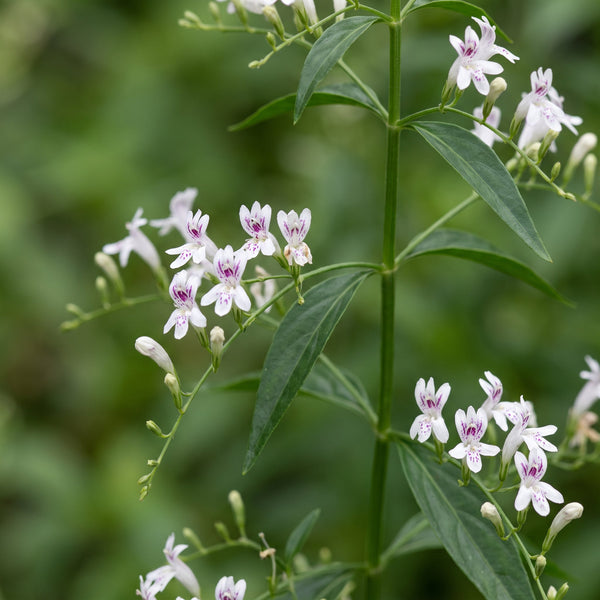
Ashwagandha is a root. It grows in India, the Middle East, and parts of Africa. Ayurvedic medicine has used it for centuries as a rasayana, a category of herbs meant to support long-term vitality instead of targeting a single symptom. Modern work has narrowed in on withanolides, a group of steroidal compounds concentrated in the root, as the likely source of its measurable effects. Most commercial preparations, including the branded KSM-66 form, are standardized to a specific withanolide percentage. That way, a capsule delivers a consistent amount batch to batch, rather than the variable content typical of raw root powder.
Unstandardized root powders can vary several-fold in withanolide content. The variation depends on the plant part used, the extraction method, and where the root was grown. A capsule labeled "800 mg ashwagandha" is not automatically equivalent to another capsule carrying the same number on the front. KSM-66, one of the more heavily studied branded extracts, is described by its manufacturer as root-only, standardized to 5 percent withanolides, and produced without alcohol or chemical solvents. Much of the clinical literature on the root and sleep has used either this preparation or a comparably standardized one.¹
None of that evidence frames the herb as a sedative. The mechanism under investigation is hormonal. It behaves more like a gradual adjustment to the body's daily rhythm than a short-acting sedative effect.
See Related: What Are Botanicals And How Can They Support Health?
What Does the Research Show About Ashwagandha and Sleep?
The single most useful data point on this topic comes from a 2021 systematic review and meta-analysis. It pooled five randomized, placebo-controlled studies covering 400 adults. The extract produced a small but statistically significant improvement in overall sleep compared to placebo, with a standardized mean difference of -0.59.² That is a modest effect by clinical research standards. It also came with meaningful disagreement between the pooled studies, reflected in a heterogeneity statistic (I² = 62 percent). In plain terms, the five studies did not line up with each other as tightly as a cleaner result would look.
That same analysis found the effect was not uniform across every subgroup. It was more pronounced in adults with diagnosed insomnia than in generally healthy sleepers. It was also more pronounced at doses of 600 mg per day or higher, and in studies that ran eight weeks or longer.² Shorter, lower-dose trials still contributed to the pooled number. They just carried less statistical weight.
Individual studies add texture to that summary figure. In a six-week, double-blind trial of 150 healthy adults with self-reported non-restorative sleep, a 120 mg daily dose of a specific standardized preparation (Shoden) produced a 72 percent improvement in self-reported sleep quality. The placebo group improved by 29 percent.³ Wrist actigraphy backed this up. This is an objective, movement-based measure, not a questionnaire. The active group showed significant gains in sleep efficiency, total sleep time, sleep onset latency, and time spent awake after initially falling asleep.³
A separate eight-week trial split 80 participants into two arms. One arm was healthy volunteers, the other people with a diagnosed sleep-onset or maintenance disorder. The root preparation improved sleep onset latency and sleep efficiency in both groups, with larger gains in the insomnia arm.⁴ That paper's published abstract does not specify the milligram dose used, which is worth flagging instead of guessing at.
How Much Ashwagandha Do Researchers Typically Study for Sleep?
Dosing across this literature is inconsistent enough that a shopper comparing labels has to do real homework. The lowest effective dose in the published record was 120 mg per day of a proprietary standardized preparation, taken for six weeks.³ At the higher end, a 30-day study in college students used 700 mg per day of a full-spectrum root preparation.⁵ A 90-day study in adults with mild to moderate anxiety and depression went a different direction: 500 mg of a root preparation standardized to 2.5 percent withanolides, paired with 5 mg of piperine, taken once nightly. That works out to roughly 12.5 mg of withanolides per day.⁶
Sustained-release formulations complicate the comparison further, and a recent study illustrates why. A 2026 three-arm study tested 150 mg and 300 mg doses of a slow-release capsule against placebo. It ran 60 days, in adults who scored moderately high on a standard daily-pressure scale at baseline. Both active doses improved sleep quality and daily-pressure scores relative to placebo, and the 300 mg group also showed a significant drop in serum cortisol by day 60. The 150 mg group did not clear that bar.⁷
Taking 600 mg of standardized root extract for 28 days also produced a significant improvement in perceived sleep quality, in a small trial of professional female footballers.⁸ Rest there was a secondary measure, tracked through a general athlete-wellness index rather than a dedicated sleep questionnaire. Put the numbers side by side and a rough pattern emerges. Doses at or above 600 mg per day, sustained for eight weeks or more, produced the clearest pooled signal in the meta-analytic data.² Lower doses and shorter studies still reported benefits of their own; they simply carried less statistical weight.
How Does Ashwagandha Work With the Body's Nightly Rhythms?
Ashwagandha does not appear to work the way a conventional sedative does. Rather than acting directly on the central nervous system to induce drowsiness, the leading explanation involves the hypothalamic-pituitary-adrenal axis. This is the hormonal loop that governs the body's daily cortisol rhythm, and a 2026 systematic review of adaptogenic botanicals covered 24 trials of Withania somnifera and Rhodiola combined, looking at exactly this pathway. It concluded their effects traced back to this axis. The pathways involved included neurotransmission and immune-hormonal signaling, not sedation.¹
Evidence for that mechanism comes most clearly from the sustained-release trial mentioned above. Adults taking 300 mg per day for 60 days showed a measurable drop in serum cortisol alongside the reported improvements. The 150 mg group improved on rest and daily-pressure scores too, but without a statistically significant cortisol change.⁷ That dose-dependent split, between symptom improvement and the underlying hormone marker, is easy to miss in a headline, it helps explain why the effect tends to build gradually, rather than working like a nightly switch.
This is also the mechanistic reason the root and melatonin occupy different categories, even though both end up in nightly capsules. Melatonin signals the brain's internal clock directly. Ashwagandha appears to work upstream of that, on the hormonal system that shapes how wound-up or settled the body is heading into the evening in the first place. The literature does not regard the two as interchangeable.
Bonus: Why Do I Feel Worse After Sleeping? Understanding Morning Fatigue
What Does the Evidence Not Yet Show?
Gaps deserve to be named plainly here too, even though the picture above is genuinely promising. A 30-day, placebo-controlled trial in 60 college students found no significant overall interaction between group and time on sleep scores under the primary statistical model. Only after the researchers controlled for each participant's starting sleep score did the active group show a meaningfully better final result than placebo.⁵ Thirty days may simply be too short a window. That is what the study's own authors suggested, noting that other studies showing more pronounced effects on daily-pressure measures ran closer to six weeks.⁵
A similar caveat applies to the athlete trial. Thirty professional footballers is a small sample for drawing broad conclusions. Rest was captured through the Hooper Index, a general athlete-wellness questionnaire, rather than a validated clinical sleep instrument like the Pittsburgh Sleep Quality Index.⁸ A perceived improvement on a wellness index is a real finding. It is not the same as a change captured by actigraphy or polysomnography.
Pooled evidence carries its own asterisk. A 2024 meta-analysis of five randomized studies on anxiety and insomnia found significant improvements in sleep onset latency, total sleep time, sleep efficiency, and the Pittsburgh Sleep Quality Index score. It found no improvement in wake time after sleep onset or total time in bed. Heterogeneity in that pooled anxiety analysis reached I² = 98 percent, which is a real limitation rather than a statistical footnote, and the authors called for larger trials to confirm the pooled effect.⁹ High heterogeneity generally means the underlying data sets differed enough in population, dose, or preparation. Averaging them together produces a fuzzier picture than five studies measuring the exact same thing would.
None of this erases the overall direction of the evidence. What it establishes is a fairly ordinary truth about supplement science. Effect sizes are modest. Populations vary. And a meaningful share of the strongest data still comes from trials run in India, using extracts that are not always identical to what ends up in a U.S. retail capsule.
What Do Buyers Ask Most About Ashwagandha and Sleep?
Two questions come up more than any others once someone has the bottle in hand. The first is about dosage: is 800 mg of KSM-66 paired with 75 mg of magnesium the right amount, or does restful sleep support call for more? The dosing literature covered above puts an 800 mg KSM-66 serving at or above the 600 mg per day mark most consistently linked to a measurable effect on rest.² The label's own suggested use is two capsules daily, or as directed by a healthcare professional, and there is no published evidence behind taking more than that.
Magnesium is a smaller piece of that dosage question, by design. Seventy-five milligrams of elemental magnesium, from a combined oxide and glycinate blend, sits well below the 250 mg used in the one dedicated magnesium-sleep trial covered earlier.¹⁰ Its job here is rounding out the formula, not carrying the effect on its own.
Timing is the second common question: does this have to be taken at night, or can it be taken any time of day? The product is formulated and labeled as a nightly routine, two capsules per serving. That lines up with one of the human trials covered above, which dosed its root preparation once daily at night specifically.⁶ Not every trial specified a time of day, though. Several simply reported dosing "once daily" without stating morning or evening, so the evidence base does not settle the timing question with the same precision as the dosage question.
Taking it consistently, at the same time each evening, is a reasonable way to follow both the label and the research behind it. A healthcare provider can confirm whether that timing and combination make sense for a specific medication list or health history, which is not something this article, or any general evidence summary, can assess for an individual.
What Should You Look for in a Nightly Ashwagandha Supplement?
Once the evidence is in front of you, the label-reading part is fairly mechanical. Label accuracy is not guaranteed by default in this category, so check:
- Milligram dose per serving, measured against what the studies actually used, not the total weight of a proprietary blend hiding several ingredients behind one number.
- Withanolide standardization percentage. A 5 percent extract and a 1 percent extract are not comparable products, even at the same milligram weight.
- Independent, third-party lab verification of what is in the capsule.
- Serving size, since the milligram figure on the front of a bottle is often split across two capsules.
Most of the studies covered above used doses of 120 mg to 700 mg of various standardized preparations, and the strongest pooled results clustered at 600 mg or more.² An 800 mg KSM-66 serving sits near the top of that range, though a higher number on a label is not automatically better if the extraction and standardization behind it are inconsistent.
For most adults, a nightly formula built around a validated dose of KSM-66, alongside a small set of complementary nutrients, may help support calm and restful sleep as part of a consistent bedtime routine. This is the formula behind Premium KSM-66 Ashwagandha with Magnesium from NCL (Natural Cure Labs). It delivers 800 mg of KSM-66 in a two-capsule nightly serving, without melatonin. Magnesium (75 mg elemental, as magnesium oxide and magnesium glycinate), L-theanine, and vitamin B6 round out the formula, and the capsules are vegan, third-party lab tested, and made in an NSF-certified, cGMP-audited facility. ‡

Magnesium's role here is worth being precise about. A 2025 randomized trial found that 250 mg of elemental magnesium (as magnesium bisglycinate) modestly reduced insomnia severity scores over four weeks. The effect size was small, and no other psychological outcome changed significantly.¹⁰ A typical multi-ingredient nightly capsule, this one included, provides a fraction of that elemental dose. That does not make the magnesium pointless, it does mean the ingredient is realistically playing a supporting role in the formula rather than driving the primary effect on its own, which lines up with how it is positioned here to begin with.
Keep Reading: What It Means To Be GMP-Certified & Why It's Important
Final Thoughts
Ashwagandha's sleep literature is unusually clean for a botanical supplement. It comes from randomized, placebo-controlled work in humans, not laboratory extrapolation. The pooled effect is modest, but it points in a consistent direction across most of the available studies.
The honest caveats matter just as much as the positive findings. Dosing is not standardized across the field, most studies run considerably shorter than a person's actual supplement routine and a meaningful share of the evidence still comes from a fairly narrow set of research groups and geographic regions. Rest improved in most of these studies by working with the body's cortisol rhythm, rather than by sedating anyone into it. That is a meaningfully different proposition than what most people picture when they hear "sleep supplement."
As with any supplement, individual responses can vary, and it is always advisable to consult a healthcare provider before adding a new routine product, particularly if you take medications or have existing health considerations.
References
- Łuszczak, J., & Kocki, J. (2026). Clinical evidence for the adaptogenic effects of Withania somnifera and Rhodiola rosea - A systematic review with molecular interpretation of psychometric outcomes. Annals of Agricultural and Environmental Medicine, 33(1), 3-11. https://doi.org/10.26444/aaem/213417
- Cheah, K. L., Norhayati, M. N., Husniati Yaacob, L., & Abdul Rahman, R. (2021). Effect of Ashwagandha (Withania somnifera) extract on sleep: A systematic review and meta-analysis. PLoS ONE, 16(9), e0257843. https://doi.org/10.1371/journal.pone.0257843
- Deshpande, A., Irani, N., Balkrishnan, R., & Benny, I. R. (2020). A randomized, double-blind, placebo-controlled study to evaluate the effects of ashwagandha (Withania somnifera) extract on sleep quality in healthy adults. Sleep Medicine, 72, 28-36. https://doi.org/10.1016/j.sleep.2020.03.012
- Langade, D., Thakare, V., Kanchi, S., & Kelgane, S. (2020). Clinical evaluation of the pharmacological impact of ashwagandha root extract on sleep in healthy volunteers and insomnia patients: A double-blind, randomized, parallel-group, placebo-controlled study. Journal of Ethnopharmacology, 264, 113276. https://doi.org/10.1016/j.jep.2020.113276
- O'Connor, J., Lindsay, K., Baker, C., Kirby, J., Hutchins, A., & Harris, M. (2022). The impact of ashwagandha on stress, sleep quality, and food cravings in college students: Quantitative analysis of a double-blind randomized control trial. Journal of Medicinal Food, 25(12), 1086-1094. https://doi.org/10.1089/jmf.2022.0040
- Majeed, M., Nagabhushanam, K., Murali, A., Vishwanathan, D. T., Mamidala, R. V., & Mundkur, L. (2023). A standardized Withania somnifera (Linn.) root extract with piperine alleviates the symptoms of anxiety and depression by increasing serotonin levels: A double-blind, randomized, placebo-controlled study. Journal of Integrative and Complementary Medicine, 30(5), 459-468. https://doi.org/10.1089/jicm.2023.0279
- Thanawala, S., Shah, R., Alluri, K. V., Bhupathiraju, K., Desomayanandanam, P., & Bhuvenendran, A. (2026). Efficacy and safety of Ashwagandha root extract sustained-release (AshwaSR) capsules in healthy adult, stressed subjects: A randomized, double-blind, placebo-controlled, parallel-group, 3-arm clinical trial. Medicine, 105(11), e47990. https://doi.org/10.1097/MD.0000000000047990
- Coope, O. C., Reales Salguero, A., Spurr, T., Páez Calvente, A., Domenech Farre, A., Jordán Fisas, E., Lloyd, B., Gooderick, J., Abad Sangrà, M., & Roman-Viñas, B. (2025). Effects of root extract of ashwagandha (Withania somnifera) on perception of recovery and muscle strength in female athletes. European Journal of Sport Science, 25(3), e12265. https://doi.org/10.1002/ejsc.12265
- Fatima, K., Malik, J., Muskan, F., Raza, G., Waseem, A., Shahid, H., Jaffery, S. F., Khan, U., Zaheer, M. K., Shaikh, Y., & Rashid, A. M. (2024). Safety and efficacy of Withania somnifera for anxiety and insomnia: Systematic review and meta-analysis. Human Psychopharmacology, 39(6), e2911. https://doi.org/10.1002/hup.2911
- Schuster, J., Cycelskij, I., Lopresti, A., & Hahn, A. (2025). Magnesium bisglycinate supplementation in healthy adults reporting poor sleep: A randomized, placebo-controlled trial. Nature and Science of Sleep, 17, 2027-2040. https://doi.org/10.2147/NSS.S524348
‡ These statements have not been evaluated by the Food and Drug Administration. This product is not intended to diagnose, treat, cure, or prevent any disease.